Tuesday, July 5, 2016

Rent, Mortgage and the Real Origins of Slavery

I've realised there's a big misconception when it comes to slavery.

The general view, logical though it sounds, is that people are forced into slavery by the fact that slave-owners are unwilling to pay people for their labour.

The logical consequence of this thinking then being that "paid work" is something of a step up from slavery ;- paid work equals freedom, unpaid work equals slavery.

This is the view I'd always held and it appears logical enough at first view. However, after reading up on how people were actually forced into slavery in former times I've come to realise that this view is very much incorrect  ..and that our misconceptions on this are fueling much of the misery we see in human society today.

So ..how did slavery really start?

The example that really opened my eyes was the story of how the American continent was discovered and conquered by Europeans.

Now to simplify things it seems there were two categories that individual Europeans could fall into when heading for this New World.

The first type were people simply looking for new land to start a new life - people who simply wanted a little slice of land to live on, feed themselves and raise a family.

The second type were people with grander ambitions - these people wanted to become rich and powerful. To rise up the social ladder, either in the Americas or back home in Europe, through the acquisition of money, resources and power.

Now it's this second group that we owe the slavery in the Americas to ..and this is why;

When these explorers went over in search of wealth and fame they decided to set up plantations and mines in order to exploit the natural resources of the land. However, they needed people to work on these plantations and down these mine pits.

So, they turned to the native population ...BUT the native population didn't want to spend their lives working on a plantation or down a mine ..not even if they were being paid. And they couldn't be persuaded to do so.

This is because they already had everything they needed and wanted.

They had homes - they didn't need to pay rent or mortgage for the luxury of having a home. Water fell from the sky and could be taken from streams or rivers for free. All they really had to do was find food - either by hunting, foraging or growing it themselves. And this only took a few hours a day. (Even today Amazonian tribes only spend a few hours a day "working").

So they had everything they needed, they were their own boss and they only had to work a fraction of the time that we do now (and certainly only a small fraction of the time they would've had to spend working down a mine or on a plantation - pay or no pay).

The idea of working all day, every day simply wasn't attractive to them - and given the choice who on earth would choose otherwise.

So, the plantation and mine owners had to literally hunt down the natives and force them at knife point or gun point to work (this is where we get the modern business term "head-hunting" from). They also had to ship slaves over from Africa.

So, they had to enslave people, not because they didn't want to pay people, but because the people simply did not want to work for them full stop.

..and this illustrates just how crazy our modern way of living is, and likewise illustrates how it's the Rent & Mortgage factor that is forcing us to work such extreme hours. As it's this need to pay rent or mortgage that is one of the driving forces behind why we have to go "out to work" in the first place.

For most people rent or mortgage is the biggest bill they have to pay. It often accounts for at least half of someones outgoings.

So, think about this, most people are going out to work primarily to pay for the privilege of having somewhere to live. Somewhere to exist. Somewhere to breathe. Somewhere to sleep. Somewhere to eat. Somewhere to BE.

Isn't that kinda crazy? Most native peoples took it for granted that they were entitled to somewhere to exist. They weren't paying for the right to simply breathe in and out somewhere. Yet we are, and we think we're free.

If we all had somewhere to live - rent or mortgage free - we would all have to work only half the time we do. We'd all be happier, healthier. Society would be better in every way.

So how is it that we've come to find ourselves in a system where we have to pay money to another human being simply for the right to exist somewhere?

I'd say we're all entitled to at least a little bit of land by birth.


Friday, April 29, 2016

Lugh, Lugs Lodge and the Tuatha Dé Danann

A little bit of word investigation today.

This all started with some speculation with a friend about a building in my home town of Middlesbrough. The building concerned was the old synagogue near Albert Park. The building is not in use as a synagogue anymore and has now been converted into apartments. The building is named Lugs Lodge and has a big 33 above the door (it being house no.33 on the road).


Having read lots of books about conspiracy theories and Freemasons controlling the world the name Lugs Lodge, along with the big 33, used to fascinate me no end. And I often wondered what the building was for and why it was so named. When I discovered it was simply a bunch of flats or apartments it seemed a little more mundane than I had imagined.

The fact that it used to be a synagogue also interested me as well. It seems odd that there was once a flourishing Jewish community in Middlesbrough that has since dwindled away. There's also a small Jewish cemetery in town, which again has always seemed a little poignant and enigmatic to me.

Anyhow, after recently speaking with a friend about the building I decided to look up the name Lug to see if there was a meaning to it (of course, it could simply be the name, or nickname, of the person who owns the apartment block, but that would be way too boring).

I found that the name Lug, or Lugh, is the name of an Irish deity, depicted in texts as a hero or high-king. The etymology of the name was particularly intriguing. According to Wikipedia it either means light or oath - both quite fitting masonic motifs.
"Lugh's name has been interpreted as deriving from the Proto-Indo-European root *leuk-, "flashing light", and he is often surrounded by solar imagery, so from Victorian times he has often been considered a sun god, similar to the Greco-Roman Apollo though historically he is only ever equated with Mercury."
"Juliette Wood interprets Lugh's name as deriving from the Celtic root *lugios, "oath", and the Irish word lugh connotes ideas of "blasphemy, cussing, lies, bond, joint, binding oath", which strengthens the identification with Mercury, who was, among other attributes, a god of contracts."
Reading up on Lugh also led me to read up on the Tuatha Dé Danann - the supernatural tribe from Irish mythology that Lugh was said to descend from.

The Tuatha Dé Danann often pop up in relation to conspiracies on-line. What struck me though was the Tu sound at the beginning of the name. I've mentioned this sound on here before, and how it seems to pop up in history again and again. Jew, Dieu, Jutes, Teu(-tonic), Tudors, Tiw (pronounced Tu) - the god from which we get the name Tuesday. I've even linked it to the words Druid and David.

I read all these names to essentially mean god or godly people. So it was something of a reaffirmation to read the etymology of the name Tuatha Dé Danann on Wikipedia.
"The Old Irish word tuath (plural tuatha) means "people, tribe, nation"; dé is the genitive case of día and, depending on context, can mean "god, gods, goddess" or more broadly "supernatural being, object of worship""
The dé/dia part of the name also chimes quite well. Similar to the French Dieu, the Spanish Dios also means god. (The name Tudor is said to be a Welsh variation on the Greek Theo or Theodore, again meaning god.) In fact, all these names seem to just repeat over and over. Just looking again at the name Theodore - dore could be linked to door or Druid - the name Dürer, as in the famed Albrecht Dürer meant door.

Interestingly, Wikipedia then goes on to state the following;
"In the earliest writings, the mythical race are referred to as the Tuath Dé (plural Tuatha Dé). However, Irish monks also began using the term Tuath Dé to refer to the Israelites, with the meaning "People of God". Apparently to avoid confusion with the Israelites, writers began to refer to the mythical race as the Tuath Dé Danann"
The fact that Irish monks equated the name Tuath Dé with the Israelites is fascinating and once again plays into the idea that our current interpretation of history is quite confused. Anyone who has read my previous posts will be aware that I have a vague reinterpretation of history that states that the history of the Jewish peoples is quite different to what we think (like most of human history). I'm of the opinion that most Jewish people have roots that lie in Europe and that these roots go as deep as all the other peoples of Europe (Judas in medieval times was generally depicted with white skin and red hair).

I think many of the problems we see in the world today stem from our confusion regarding history.

Wednesday, March 9, 2016

Flat Earth/Ball Earth in the Alexander Romance

I've just finished reading The Greek Alexander Romance, translated by Richard Stoneman. For those unfamiliar the Alexander Romance is a collection of stories and legends about the famous conqueror Alexander the Great. The collection has had many variants and has appeared in many different languages throughout the ages (this version tries to draw on all of them).


The "real" Alexander was said to have lived in the 4th century BC, and was supposedly tutored by the famous Greek philosopher Aristotle. I've put real in quotes because personally I'm sceptical that there ever was a real Alexander. According to official historians Alexander was a real king, that really did conquer large parts of the ancient world, and that really was tutored by the philosopher Aristotle. The official historians also state that the Alexander Romance is largely mythical nonsense and made-up fairytale stories. In fact, this is why it's called a romance - history books that don't fit official history because they're too outlandish get relabelled as romances. Even though the people who originally wrote and read these stories in bygone times never made such a distinction.

So we have a situation where academics basically pick and choose which pieces of the written record to believe and which not to believe. In this case they're quite happy to believe that Alexander was tutored by the great Aristotle, but not that interested in believing that he had conversations with talking trees (one of the many strange events that occur in the Alexander Romance).

Anyhow, The Greek Alexander Romance was an excellent read and I highly recommend it :) I could spend a full blog post going through all the various interesting tales and ideas within it [in fact, my book is covered in pencil scribbles where I've made little notes about it]. I should also mention how easy it was to read - it was actually an enjoyable experience, unlike say, Homer's Iliad which I found a real test of endurance. I can totally see why these tales about Alexander were so popular in medieval times, and why they appeared in so many variations and languages.

Finally though I'll get to the Flat Earth/Ball Earth bits.

The book contains one bit where it implicitly states that the Earth is round, then many other bits where it's implied that it's flat and has edges. I guess this is to be expected given that it's a composite of various tales and traditions.

The mention of the Earth being round comes in a passage where the Persian king Darius mocks Alexander by sending him a ball (thus implying that Alexander is a child and should still be playing with toys). Alexander replies with the following statement;
I accepted the ball, as a sign that I shall be ruler of the world - for the world is spherical like a ball.
This implies that whoever wrote this section of the story (assuming the story being relayed isn't actually true of course) believed that the Earth was round. This would suggest that there were people that believed the Earth was round at least as early as the medieval period. It's just then a case of how old or authentic you believe these texts to actually be [I've mentioned my general scepticism about the dating of texts in other posts on here before].

The parts of the text that imply that the Earth is flat are much less clear, but they nevertheless conflict with the above passage. There are constant references to Alexander trying to reach the edge of the world - of course, this could be taken in a more symbolic sense though. There's also a passage where Alexander is carried high into the sky by a large bird and sees the entire world;
"Look down on earth, Alexander!" I looked down, somewhat afraid, and behold, I saw a great snake curled up, and in the middle of the snake a tiny circle like a threshing-floor [a threshing floor is a floor, normally circular, that was used to separate out grain by the trampling of feet in days of yore]. Then my companion said to me, "Point your spear at the threshing-floor, for that is the world. The snake is the sea that surrounds the world."
This visual image would imply that the world is a disc of land on a vast ocean, but again I guess it could be open to interpretation. (On a side note doesn't it often feel like we're the grain. Maybe a threshing floor is quite an apt description.)

Another thing that caught my eye that maybe could relate to flat earth thinking came when Alexander met the Brahmins or naked philosophers of India. He asked them several questions, one of which was "Which is stronger, death or life?" They replied "Life, because the sun as it rises has strong, bright rays, but when it sets, appears to be weaker."

I thought this was quite an odd statement, but it did bring to mind how instantly the morning light seems to come upon us, and how gradually the daylight seems to fade in the evening. Evening is in between morning and night, but what's in between night and morning? I'm sure this is just a question of perception, after all we're normally tucked up in bed in the early hours of the morning, so we rarely experience the true break of dawn, but I thought it was an interesting thing to make note of.

A final thing I thought was worth mentioning concerned the continents of the world, and came in a bit about Alexander taking on the Amazons - the famed female warriors of Greek myth. Mention of the name Amazon of course makes most people think of the Amazon river in South America, however we're told by historians that these ancient Amazons dwelt somewhere completely different. This would obviously make complete sense given that the New World was only discovered by Europeans about 500 years ago - long after the ancient Amazons were said to exist. In fact, if I recall correctly I think one story goes that the Amazon river was so named by European explorers because they encountered vicious female warriors along the river - which reminded them of the Greek tales.

However, setting conventional history aside for a moment, it's interesting to note how the country of the Amazons is described in the Alexander Romance.
We live in the hinterland across the river Amazon. Our country is completely encircled by a river, and it takes a year to travel around it. There is only one entrance.
If you take encircled by a river to mean encircled by an ocean then this would be a pretty decent description of the South American continent. A year to travel around it would certainly suggest a landmass of continent size. The one entrance possibly being the Isthmus of Panama in middle America. In fact, somewhat coincidentally, the Isthmus of Panama is also known as the Isthmus of Darien - and the name Darien is said to derive from the Persian name Darius. As mentioned above Darius is the Persian king that Alexander spends much of his time at war with in the book.

The possible Amazon/South America link is strengthened in a later passage in the book where Alexander tells the Amazons;
We have made ourself lord of the three continents and we have not failed to set up trophies of all our victories. It would be seen as shameful in us if we did not campaign against you too.
With the three already conquered continents being Africa, Europe and Asia this would suggest that the land of the Amazons lies somewhere else. Again though this is pretty heady speculation and I guess the text can be read numerous ways. Especially given that we're reading a translation of a work that has had so many variations down the years.

It's still highly interesting though. Maybe all these works we attribute to the ancient and medieval world are much more recent than we think. I'm slowly becoming convinced that the official history we have of the world is very confused indeed.

Thursday, February 25, 2016

Flat Earth & Me, 2009.

[The following article is from 2009. It's an article recommending books that I published on an old blog. I re-read it today after digging it out off my old computer. It was strange reading it as the first book I recommend is Flat Earth by Christine Garwood. It was also odd seeing how much my writing style and opinions have changed since then. - I had to correct a few spelling mistakes in it too :) ]

10 Books for Inquiring Minds

For anyone looking for a good read the following list offers some of my favourites.

1) Flat Earth: The History of an Infamous Idea - Christine Garwood

This is one of my all time favourite books and from the moment I started reading it I found it fascinating.  It’s about the history that surrounds the notion that the Earth is flat and it tells the interesting tales of the various people who have believed this to be the case.  It first of all lays to rest the myth that those who lived in the age before Columbus were of the opinion that the earth was flat, showing that most people probably had no opinion either way and that those that did were more likely to believe that the Earth was in fact spherical.  It then goes on to illustrate how the belief in a flat Earth has actually had its strongest advocacy in the last two centuries, more often than not as a reaction to the rise of modern science.  The books greatest achievement is the way it forces the reader to question accepted wisdom and challenge orthodoxy.  I must admit that even I myself was left with a few seeds of doubt as to the true nature of earthly things.  The Earth is of course round (I think!) but we seem to accept this more through faith than through understanding.  For instance how many people out there can actually explain the science and the reason behind our knowledge regarding the shape of the Earth - very few I would imagine.  In some ways we’re as ignorant as those supposed simpler folk from bygone times that we casually mock with condescending voice.  To our eyes the world looks flat, yet most of us betray this everyday observation simply because we have been told from childhood that things are otherwise.  If you want a book that will challenge your assumptions this is it.  A must read for anyone even vaguely interested in history or science.


2) Seven Deadly Colours - Andrew Parker

This engaging book is about how nature creates and uses colour, and how the human and animal eye perceives it.  Each chapter in the book deals with a separate colour, from ultra-violet through to red, and provides along the way a real insight into the visual side of evolution and the scientific discoveries that have led to such knowledge.  Reading this book really renewed my faith in evolution, as it highlighted to me the genuine ingenuity and intelligent beauty in the ever-changing natural world.  I implore anyone that has doubts about the veracity of evolution to read this book as soon as possible.


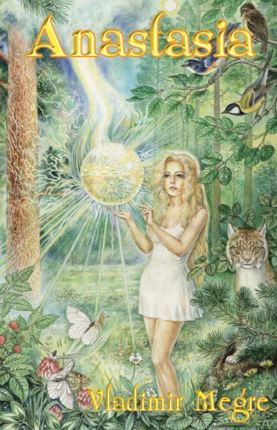
3) Anastasia - Vladimir Megre

This is a very strange book indeed. I first heard about it in an alternative magazine called Nexus and it came with rave reviews, many people claiming that it had actually changed their lives. Naturally I was curious and when I final got hold of a copy I found it quite fascinating, however at the same time I must admit I was fairly sceptical about its claims. Written by Vladimir Megre, it concerns a trip he once made to the Siberian taiga where he met a strange and unusual woman named Anastasia. This women, who lived alone in the wilderness, then proceeded to tell him the secrets of life, nature and religion. It’s supposedly a true story, although this claim takes a stretch of the imagination. To be honest I still really don’t know what to make of this book, which I know doesn’t sound like a ringing endorsement. However, whichever way you choose to take the books claims they are never the less fascinating.  I was actually working in a factory when I first read this book. I read it during my breaks and it really did feel like I was entering another world - the contrast between the nature-loving ideas in this book and the cold clattering atmosphere of the factory floor couldn’t have been starker. Although I’m not really a new age person I must admit that this book really did make an impression on me. I still think about some of its ideas from time to time and even though the hard-headed sceptic in me refuses to take it seriously, the book still grips me enough to make me want to read it again, which is rare for me as I normally only ever read books once. A truly unique tale.


4) Rule by Secrecy - Jim Marrs

This is one of the most interesting books I've ever read.  It’s basically a retelling of the last 250 years of European and American history, only through the eyes of a conspiracy theorist.  It takes us through the alternative explanations for the French, Russian and American revolutions, the two World Wars, the assassination of JFK, the Napoleonic wars and virtually every other major historical event since the 1700’s.  Whether you choose to believe in the various theories or not it never the less leads you to look at the official version of history in a new light.


5) Pagan Resurrection - Richard Rudgley

This is another book that wanders through its topic with careless ease. It’s about pagan myths and gods, in particular the pagan deity Odin.  The book explores the way these myths and ideas have returned from the wilderness and re-entered mainstream thought. Showing how they have been reawakened now that Christianity has started to lose its grip on the western psyche. The book is at times fascinating and it effectively illustrates how pagan concepts have affected much of Europe and North America. Highlighting the role this pagan revival played in the rise of Nazism, the affect it had on the philosophies of Carl Jung and its presence in some of the major art and literature that has been produced over the last couple of centuries. This is a really insightful book and it helps cast light on an aspect of modern culture that often goes unnoticed.


6) Vive la Revolution - Mark Steel

Vive la Revolution by British comedian Mark Steel is possibly the most entertaining and informative book ever written about the French revolution.  With a wry sense of humour and a genuine passion for idealistic politics Steel introduces us to the various characters and groundbreaking ideas that inspired the events of one of the most tumultuous periods of European history.  I can’t express how much I enjoyed reading this book.


7) Curious Scotland, Tales from a Hidden History - George Rosie

This is another book that I found fascinating. I actually bought it almost by accident. Whilst looking for another book this one seemed to somehow catch my attention. I think it was the cover that really caught my eye. It had a rather grotesque and striking picture of a kilted man with the head of a bull on the front. This unusual image having caught my attention then somehow managed to persuade me to buy the book. When I took it home I didn’t really know what to expect. However after I started reading I just couldn’t put it down. The book is full of little tales and stories and is one of those books that constantly takes the reader down strange paths and avenues. The author has a remarkable ability when it comes to digging out little gems from history and no matter where this book wanders it never ceases to be interesting. In fact the title ‘Curious Scotland’ is rather apt, as it is definitely a book for the curious. If anyone is thinking about visiting Scotland this would be a great book to whet your appetite. Alternatively, if you actually live in Scotland this book will probably tell you a lot you don’t already know about the country. A real jewel box of a book.


8) Leonardo: The First Scientist - Michael White

Leonardo da Vinci was a fascinating man and this book explores the depths of his genius.  As the title suggests the book argues the case for the celebration of Leonardo’s scientific achievements as well as his artistic ones.  In a friendly tone its author informs us about Leonardo’s experiments with light, his investigations into the human body and his holistic views regarding the universe as a whole.  We also gain insights into Leonardo’s childhood, his views on vegetarianism and his various other talents - including his abilities as an inventor and a musician.


9) Alien Base - Timothy Good

‘Alien Base’ is a book that looks at the possibility that alien races are colonising the planet Earth.  The great thing about the book is that it stays away from the more conventional alien/UFO stories and concentrates on the more outrageous ones, making it interesting reading whether you’re a believer or not.  Consequently the book contains a great wealth of information for UFO enthusiasts as well as a wellspring of ideas for any aspiring science-fiction writer.  All in all it’s a bountiful repository for the more fantastical side of the UFO phenomena.


10) In the Rose Garden of the Martyrs - Christopher de Bellaigue

With so much coverage being devoted to Iran at the moment, I'm sure there’s a lot of people out there that would like to learn more about the country.  For those people this book would be the perfect start as it delves into the very heart of Persian culture, uncovering the politics, the religion and the people that make Iran the country that it is today.  It’s a book that every politically minded person should read as it helps to explain the distrust Iranians have of the west and also the suffering that Iranians have endured as a consequence of the power politics that have been played out in the Middle-East.  It’s a book that will leave readers feeling that they have much more in common with the people of Iran than they ever realised.

Friday, January 8, 2016

Beditation - Or Winter Meditation

Do you ever get that thing where you think you've invented something new, but then when you search on-line it turns out you haven't? Well, I've just had that experience. I thought I'd coined the term beditation xD - meditating in bed essentially. However, unsurprisingly, after looking it up on the Internet it turns out the term is already in use. On-line it seems to be used to describe meditation practices that help you sleep, or alternatively meditation done whilst lying down. My intention for the term was going to be slightly different though.

I use it to describe my own form of "lazy" meditation involving music. Basically I go to bed for an hour or so, put some music on, and then just relax and let my mind wander as I drift in and out of half-sleep. I'm sure other people do this too. Normally I'll put on some experimental music, like the Binaural Beats I mentioned in my last post, or something a little more atmospheric. I really like Kid A by Radiohead for doing this actually. It depends on my mood though. I usually do this beditation in the evening time, when it's too early to go to bed properly, but late enough that I'm too tired to be bothered doing anything else.

I do sometimes do traditional meditation and other more meditative things like Yoga, and can really see the benefit of them, however I don't have the discipline to make them a regular thing. Plus it's not really suited to the British climate, especially at this time of the year. It's one thing relaxing in silence with your eyes closed on a beautiful summers day, but when you're in a wintry Middlesbrough with cold feet and very little daylight coming in through the window it isn't as attractive. Why can't you meditate snuggled up in a duvet? Does everything have to be such hard work? I'm sure there's a lazier way to relieve stress and find enlightenment.

Listening to music whilst relaxing and falling in and out of sleep is something I find particularly enjoyable. Just as your mind relaxes and wanders more freely when you're walking or travelling than it does when you're sitting or standing still it's similar with music. The changing audioscape created by the music is like the changing landscape of a journey. It helps your mind wander and go to new places.

I think I've mentioned this on-line somewhere before, that I've always been interested in the concept of hibernation. We know that some other animals dream just like we do. I wonder do bears dream? Do they dream when they hibernate? It's weird that we spend 8 hours a day sleeping and dreaming. Imagine an entire winter of it. It would be like a spiritual journey into another world.

It's a shame the term beditation is already in use really. Maybe I should just steal it anyway, as I can see my version of it taking off. I can imagine celebrity lifestyle gurus and women's magazines recommending it as the latest health fad in 12 months time or so xD complete with advice about what music to use and which stylish onesies to wear. Maybe I should start selling bear onesies to go with the Northern Lights hibernation theme?

I guess beditation will also be good practice for when I eventually go to Antarctica and have to endure the wintry nights there as well ;)

Saturday, January 2, 2016

2016: Year Zero

I'm deciding to make a nice fresh clean start in 2016. First up, I'm dropping the Flat Earth hashtag. What was a genuine free-thinking investigation into the nature of the world we're living in is now morphing into something a bit more murky. I don't know where it's going so I think I'll just sidestep it all and continue doing my own thing. I'm starting to feel like the snake is eating its own tail to be honest.

Amusingly, I even recently heard the conspiracy researcher Thomas Sheridan claim that flat earthers are using binaural beats to brainwash people. Now I make songs with binaural beats, or at least I used to, and I even used them in a few of my early Flat Earth videos! To my knowledge I think I'm the only person to actually do this, in fact if you search 'Binaural Beats Flat Earth' on YouTube one of my videos pops up top of the list. So I guess I'm part of the psy-op - now I really do feel like I'm in it far too deep. I even described the music as mood and mind control on the Facebook page I created for it. Talk about being hoisted by your own petard xD

https://www.facebook.com/freckledmonkey/

For those unfamiliar a binaural beat is an auditory illusion that is created by putting two different pure tones into a listeners ears. For example, say a tone of 400hz is put in one ear and a tone of 405hz put in the other, the listener will perceive to hear a third tone of 5hz - the difference between the two. Some people believe that this third tone, effectively created by the brain, can then help move the brainwaves of the listener towards that frequency. Helping to induce a different mood.

Opinions vary about whether there is any real evidence for this actually working, however when I've listened to this type of music I've found it very useful in helping me relax. Then again, of course, this could simply be some type of placebo effect. Either way it's interesting though.

In fact, in many ways all music is about manipulating another person's mood or inducing a feeling in someone. Think of the catchy advertising jingle, or the pop song you can't get out of your head. Or how a happy song can make you feel happy, or a sad one make you feel sad :(

Or think about how you may start tapping your foot or bobbing your head automatically even though you're not consciously aware that there's even music playing in the background. Also think about how hypnotic shamanic rhythmic tribal drumming can be - whoever has the drum is in control.

In modern culture it's no different, only much more complex. I love most genres of music, but I especially admire the irresistible force of catchy pop music, especially the type that often gets labelled "Illuminati Pop Music" in the conspiracy world. That's normally the good stuff! - Rihanna, Beyonce, Lady Gaga. It has a candy-sweet addictiveness to it. Possibly even more so than what used to get labelled the "Devil's music" - Rock & Roll.

It's often said that the pen is mightier than the sword, it might be worth adding though that the guitar is mightier than the pen. I think I might continue on this theme of the power of music in 2016 actually. It might be a fitting replacement for Flat Earth, especially given that it overlaps quite neatly with mathematics and the so-called Music of the Spheres.

I'll leave this article with one of my Flat Earth videos from 2015. This one is possibly the only one that had any real merit. The rest were all a little bit crappy. It has birds, bees, UFOs, a David Icke sample ..and a binaural beat thrown in for good measure :p


Good luck in 2016 everyone :)

Sunday, December 20, 2015

Flat Earth: Thoughts On 2015

For me the biggest thing about 2015 has been that I've woken up to the sheer level of fraud committed by our world governments in the name of space exploration over the last 50/60 years. It's quite staggering really. In spite of the billions spent we still can't get decent footage of the Earth from space. Something really is quite wrong.

In tandem with this 2015 has also been the year of the Flat Earth revival. I've really loved every minute of it so far and have even joined in with it to some extent - making YouTube videos and posting articles on here. I think the whole Flat Earth movement is quite cool on multiple levels. Firstly it's made people genuinely question their world view and re-evaluate the many things they took for granted. And secondly, people like Math Boylan have used it not only to wake people up, but also to create an entire counter-culture, complete with art, comedy and music videos. It's been entertaining and thought-provoking all at the same time - nothing you'll see in the mainstream media can touch it. All in all it feels a little bit how I imagine the 60's must have felt for people waking up back then. Only possibly even bigger. Maybe like Boylan says "a new renaissance".

So is the world actually flat? It's a surprisingly difficult question to answer, and I don't feel the slightest bit embarrassed in admitting that I don't actually know the answer ..well, actually I do feel a little bit embarrassed, but I think that's a hangover from a now bygone era when it was wrong to think such thoughts.

At this present time I can only point out what I think I do know. A list might make it a little more readable;

  • NASA & friends can't do what they claim they can do in space
  • Google are using balloons not satellites to provide Internet coverage in parts of the southern hemisphere
  • Private companies interested in space exploration such as Virgin Galactic seem to be struggling to make any real headway despite their money and enthusiasm
  • There doesn't seem to be any genuine continual footage of the 24 hour Sun over Antarctica
  • The politics surrounding Antarctica is just bizarre
  • The politics surrounding climate change equally so - in fact the two seem quite heavily linked
  • Money seems to be being spent infiltrating the Flat Earth movement by governments or other interested parties
  • NASA & friends are clearly watching and reacting to the movement - for example when NASA asked people to look at a set of pictures and guess which were images of frying pans and which was an image of Jupiter's moon Europa - a clear riff on Boylan's "Photo or Painting?" routine.

Listing those things 2016 looks quite promising for the Flat Earth movement. However. there's still one quite huge Achilles' heel in my opinion: The Moon - and its relationship with the Sun.

I've been watching and studying the Moon quite intensely over the last few months - very much inspired by the Flat Earth revival. I've even been shining torch lights onto Xmas baubles to see how light plays on a sphere xD Anyway, all my investigations so far have led me time and time again back to the standard, ball-Earth, model. I have to admit it really is quite a beautiful and elegant model, and it does seem to make a hell of a lot of sense when it comes to what we see up there. At times I've even felt a renewed sense of admiration for Giordano Bruno and his dreams of an infinite universe of endless planetary spheres.


I've decided I'm not giving up that easily just yet though, and I'm going to keep attempting to come up with a way to make the Sun & Moon work on a flat plane. In fact, I'm really enjoying the challenge of it to be honest. This is the beauty of having two models of the world and not just one - the competition drives investigation. People get lazy when they just assume we have all the answers. Everyone just goes back to sleep. During 2015 Flat Earth woke people up. I hope it continues to do so in 2016 as well :)